

In brief
Hash is a classic concentrate made by collecting and compressing resin-rich trichomes from cannabis or hemp flower into a denser product. It can show up as sift, pressed pieces, crumbly chunks, or soft balls depending on how it is collected and finished.
That matters because hash sits in a different lane from refined oils like distillate and pressed solventless extracts like hash rosin. If you understand what hash actually is, concentrate labels and product descriptions become much easier to sort out.
Definition
Hash is a concentrate built around collected trichomes rather than a refined oil. In practical shopping terms, it is one of the more traditional concentrate categories and often appears as pressed blocks, crumble-like pieces, sift, or soft balls depending on the method used to gather and finish the resin.
That is why hash should be treated as its own category instead of being lumped together with products like distillate, shatter, or wax. The material, method, and final texture all point to a different lane.
Hash is best understood as the classic trichome-concentrate lane: denser than flower, less refined than oils, and different from pressed solventless products like hash rosin.
History and context
Hash has been around long before many of the newer concentrate labels that now fill menus and shop pages. For many shoppers, it is the more traditional concentrate reference point, which is why it still matters when comparing classic and modern concentrate styles.
- Traditional concentrate lane — Hash existed as a classic trichome concentrate before many newer extract categories became common.
- Modern comparison point — Today shoppers compare hash against solventless, live, and refined products more often than before.
- Current relevance — Hash still matters because it helps define where products like hash rosin fit in the bigger concentrate conversation.
How it works
The basic idea is to separate the resin-rich trichomes from flower and gather them into a stronger, more concentrated product. The exact method changes the final texture, density, and cleanliness of the material, which is why different hash products can look surprisingly different while still living under the same name.
Some styles are looser and drier, while others are softer or more compressed. That variation is normal for hash and is part of what makes it different from more uniform refined oils.
What the evidence can and can’t say
The strongest claims around hash are about what it is made from and how it is finished. A better question than “is hash stronger than everything else?” is usually “what kind of hash is this, and how cleanly was it made?”
The best reader-first takeaway is that hash is a real, distinct concentrate category, but quality still depends on method, cleanliness, and presentation rather than the label alone.
- Hash is defined by concentrated trichomes rather than a refined oil profile.
- Texture and cleanliness vary a lot from one product to another.
- Hash should be judged by method, purity, and testing rather than hype words.
Types and common forms
Not every hash product looks or feels the same. The main differences come from how the trichomes are collected, how much plant material remains, and how the final product is pressed or handled.
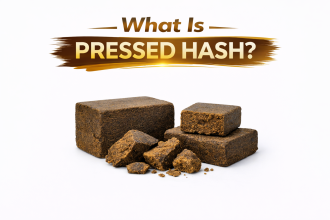
- Pressed blocks or bricks — denser, more compact forms.
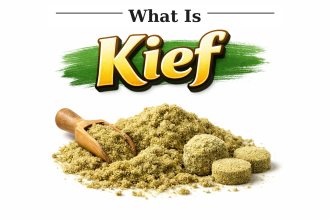
- Loose sift / kief-like material — drier, more granular material.
- Soft hash balls or pieces — more hand-worked or pliable styles.
- Cleaner or dirtier grades — depending on how much plant material remains with the trichomes.
How to use hash in real life
In real-life shopping, hash matters most when you are comparing product types and trying to understand where one concentrate category ends and another begins. It helps explain why some products are sold as classic trichome concentrates while others are further processed into oils or rosin.
- Start by deciding whether you want hash itself or a later product made from hash, such as hash rosin.
- Use texture, appearance, and testing to compare quality, not just names.
- Do not assume every product called hash will look or behave the same way.
Safety, legality, and what to watch for
Hash should be evaluated like any other concentrate: by cleanliness, source, labeling, and testing. A label alone does not tell you how pure or how well-made the product is.
Rules, age limits, and product standards can vary by state and by whether an item is sold under hemp or marijuana frameworks. Lab testing and clear product descriptions matter more than dramatic naming.
Quality checklist (COA / lab reports)
A useful COA for hash should help confirm both potency and cleanliness. Because hash can vary so much in texture and purity, lab access matters.
- Check potency and cannabinoid profile with a recent batch-specific COA.
- Look for contaminant screening such as pesticides, heavy metals, and microbial testing where available.
- Read how the product is described so you know whether it is classic hash, sift, or another related style.
- Use appearance and texture as clues, but do not treat appearance alone as proof of quality.
- Make sure you are not confusing hash with hash rosin, which belongs in a separate lane.
- Loose material, pressed pieces, and softer styles should not all be judged as if they were identical.
- The cleaner the description, the easier it is to compare quality.
- Testing, texture, and transparency matter more than hype words.
How to shop smarter
The smartest way to shop hash is to compare it as a trichome concentrate rather than as a catch-all name. Once you know that lane, product descriptions get much easier to read.
- If you want the classic concentrate itself, shop hash.
- If you want the pressed solventless oil made from hash, shop hash rosin.
- Compare products by clarity, testing, and type instead of assuming all hash products are interchangeable.
Common myths (and what’s actually true)
Hash gets misunderstood when shoppers use the word for too many different concentrate types at once.
- “Hash and hash rosin are the same.” — They are related, but they are not the same product.
- “All hash looks the same.” — Texture, density, and cleanliness vary depending on the method.
- “Hash is just another word for any concentrate.” — No. Hash is its own traditional concentrate category.
FAQ
Is hash the same as hash rosin?
No. Hash is the trichome-based concentrate itself. Hash rosin is a solventless extract pressed from hash.
Why can hash look different from one product to another?
Because collection and finishing methods affect texture, density, and cleanliness.
Is hash a concentrate?
Yes. It is one of the older and more traditional concentrate styles.