

In brief
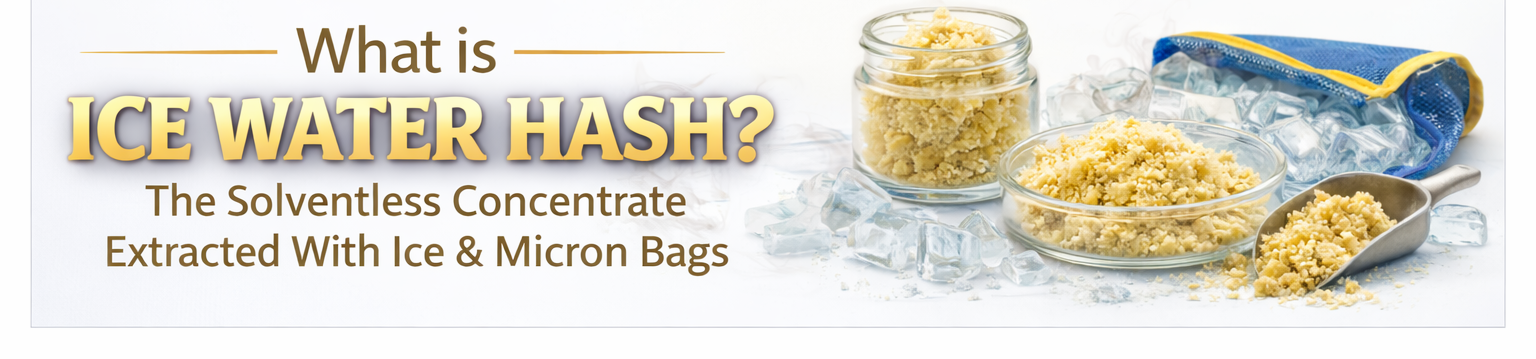
Ice water hash is a solventless cannabis concentrate made by using very cold water, agitation, and filter bags to separate trichome heads from plant material. In practice, it describes the wash-based resin collected from an ice-water extraction before people start talking about melt grade, bag size, or whether the result is sold as bubble hash.
The term matters because it focuses on process. Where “bubble hash” often describes the finished resin people see in a jar, “ice water hash” highlights the extraction method itself—cold water, agitation, filtration, collection, and careful drying.
Definition
Ice water hash is resin collected through a cold-water wash and micron filtration process. In everyday cannabis language it overlaps heavily with bubble hash, but “ice water hash” keeps the attention on how the concentrate was separated rather than on whether the final resin bubbles or melts dramatically.
That process-first lens is helpful because wash quality, filtration, and drying all affect the finished result. Two jars can both be called ice water hash and still differ a lot in cleanliness, melt behavior, aroma, and intended use.
Ice water hash is best understood as wash-separated solventless resin collected with ice, water, agitation, and filter bags, then dried into a sandy, clumped, or melt-focused concentrate.
History and context
Wash-based hash methods became more popular as makers searched for cleaner, more repeatable ways to separate resin heads without using hydrocarbon solvents. Very cold water and stacked micron bags helped create a more organized solventless process and clearer language around grades.
- What it is Ice-water-separated trichome resin collected through filter bags and dried into a loose, clumped, or melt-focused solventless concentrate.
- Why it matters It explains the extraction side of the bubble-hash conversation and helps readers understand where full melt and hash rosin begin.
- What to look for Clean aroma, good drying, sensible bag separation, and a grade that matches whether you want a topper, a melt-focused jar, or press-ready resin.
How it works
To make ice water hash, flower or trim is mixed with ice and water so the trichome heads become brittle and detach more easily. The slurry is then poured through multiple micron bags, which separate the collected resin by particle size.
After collection, the wet resin has to be dried carefully. Drying is one of the biggest quality checkpoints: clean drying preserves aroma and texture, while poor drying can flatten flavor, encourage clumping, and reduce the overall quality of the final hash.
What the evidence can and can’t say
Reader-first note: for most shoppers, the most useful part of the ice water hash topic is understanding the method, the cleanliness of the result, and how it compares with nearby solventless styles.
The easiest way to understand ice water hash is to compare it by process. Dry sift is separated dry, traditional hash is often pressed and denser, bubble hash usually refers to the washed resin once collected and dried, and hash rosin is the oil extracted by pressing quality hash.
- Compared with dry sift — Ice water hash is made with cold-water agitation and filtration, so it often looks cleaner and more resin-rich than standard sift.
- Compared with traditional hash — Ice water hash is usually lighter, looser, and more process-driven than dark pressed slabs or balls.
- Compared with bubble hash — The two terms overlap heavily, but ice water hash points more directly to the wash method itself.
Types and common forms
Ice water hash can range from pale sandy resin to richer, slightly clumped material depending on input quality, micron selection, wash technique, and drying. Some batches are better suited to topping flower, while cleaner grades may be aimed at melt-focused use or pressing.
- Full-melt grade — Cleaner wash hash that melts heavily and leaves minimal residue when heated.
- Melt-ready grade — Good-quality wash hash that performs well, though it may leave more residue than true full melt.
- Sandy wash hash — A drier, easier-to-handle style often stored in jars or used as a topper.
- Press-grade hash — Wash hash selected less for direct melt and more for pressing into hash rosin.
How to use ice water hash in real life
How someone uses ice water hash depends on grade. Sandy or lower-melt material is often sprinkled into flower, while cleaner grades may be used more directly when the resin quality supports it.
- Start small because solventless concentrates can feel stronger than plain flower.
- Lower heat usually preserves more aroma than blasting it with excessive heat.
- Cleaner grades are better candidates for melt-focused use than basic topper-grade material.
- Keep it cool, sealed, and dry so the texture holds up.
Safety, legality, and what to watch for
As with any concentrate, potency matters. Start lower than you think you need, especially if you are moving from plain flower into solventless concentrates for the first time.
Storage matters too. Keep ice water hash sealed, cool, and handled with clean tools so the resin does not pick up moisture, dust, or off odors.
Quality checklist (COA / lab reports)
Good ice water hash usually looks resin-rich, cleanly separated, and properly dried. Color can range from pale blonde to richer sandy gold depending on material and bag fractions, but the cleaner signals are aroma, texture, contamination level, and drying quality.
- Understand that ice water hash is made with ice, agitation, and micron filter bags.
- Compare it with bubble hash, dry sift, traditional hash, and hash rosin so the category makes sense.
- Judge quality by texture, aroma, cleanliness, drying, and melt behavior—not color alone.
- Match the grade to the use case, whether that means topping flower, exploring better melt, or pressing.
- Store it cool, sealed, and clean so texture and aroma hold up.
- Look for a resin-rich texture rather than a dusty, lifeless appearance.
- Clean aroma matters; stale or grassy notes can suggest weaker material or sloppy drying.
- Good wash hash should look intentionally collected, not dirty or overloaded with plant contamination.
- Ask about micron ranges, drying method, and intended use if the producer shares that information clearly.
How to shop smarter
When shopping for ice water hash, focus on how it was washed, how it was dried, and how clean it looks and smells in person if you can. A pretty blonde color means less if the jar lacks aroma, feels damp, or burns dirty.
- Ask whether it is full melt, melt-ready, topper-grade, or mainly intended for pressing.
- Pay attention to micron information when a producer explains it clearly and honestly.
- Fresh, well-stored wash hash usually smells cleaner and more resin-forward than old or poorly handled product.
- Use the process to judge the jar: wash quality and drying matter as much as color.
Common myths (and what’s actually true)
A lot of confusion around ice water hash comes from people using every solventless resin word as if it means the same thing. These products are related, but not identical.
- Ice water hash is just dry sift with a new name. — No. Ice water hash is created through a cold-water wash and filtration, while dry sift is traditionally collected through dry mechanical sifting.
- Ice water hash and bubble hash are always different products. — Not always. The terms overlap a lot; the difference is often whether the speaker is focusing on the wash process or the finished resin.
- Lighter color always means better quality. — No. Cleanliness, aroma, drying, and contamination level matter more than color alone.
FAQ
What is ice water hash made from?
Ice water hash is made from cannabis resin heads separated from flower or trim using ice, cold water, agitation, and filter bags, then collected and dried.
Is ice water hash the same as bubble hash?
The terms overlap heavily. In many conversations, ice water hash describes the wash method while bubble hash describes the finished washed resin after collection and drying.
Is ice water hash the same as dry sift?
No. Both are solventless, but ice water hash uses cold-water agitation and filtration, while dry sift is generally collected through dry sifting.