
In brief
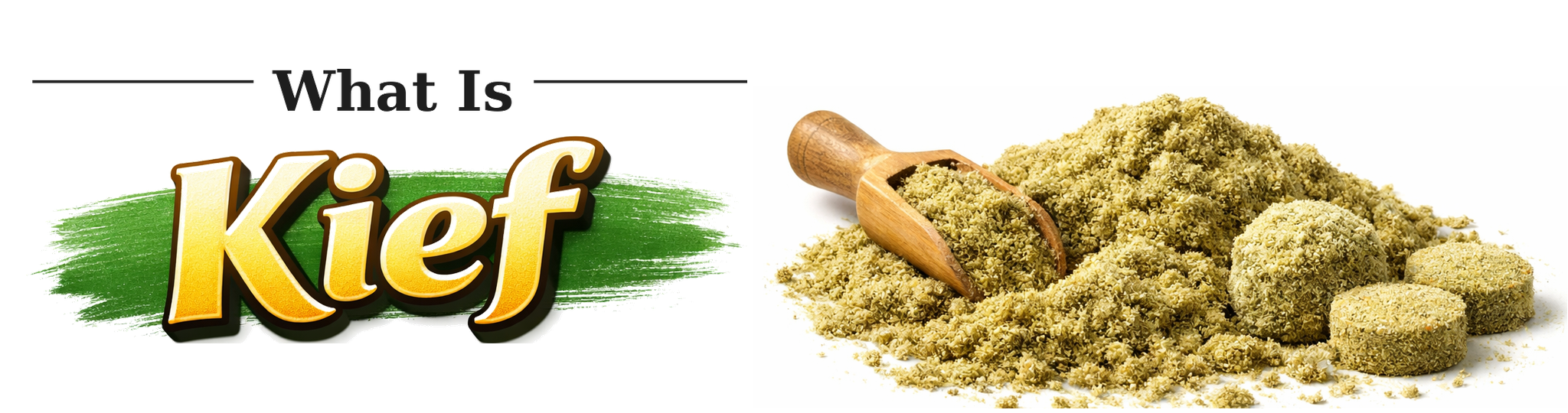
Kief is the loose collection of resin-rich trichomes that separate from cannabis flower. It looks like a fine powder or sandy concentrate and can range from pale blonde or golden to tan, brownish, or slightly green depending on how cleanly it was collected.
People often compare kief with dry sift hash, pressed hash, bubble hash, and other traditional concentrates. The key difference is that kief usually stays loose rather than being refined or compressed into another hash form.
What is kief?
Kief is the powdery collection of trichomes that naturally break away from cannabis flower. Those tiny resin glands contain cannabinoids, terpenes, and other compounds, which is why kief is often stronger and more concentrated than flower alone.
Unlike pressed hash or temple ball hash, kief usually stays loose. It can be sifted, collected in grinder chambers, or separated more intentionally, but the result is still a granular concentrate rather than a compact block or ball.
Kief is loose trichome resin. Cleaner kief usually looks lighter and more golden, while greener or darker kief often carries more plant material.
How kief forms and gets collected
Kief forms when trichomes separate from dried flower. That can happen naturally through handling, through a grinder chamber, or more intentionally through screening methods that collect the resin-rich particles.
- Natural separation — trichomes fall away from flower through movement and handling.
- Grinder collection — some grinders collect loose kief below a screen.
- Screening — finer separation can collect cleaner kief or move toward dry sift.
- Refinement — better handling reduces excess plant material.
Kief color, texture, and what that means
Kief can range from pale blonde and light gold to tan, brownish, or slightly green. That variation usually depends on how refined the collection is and how much plant matter mixed in with the trichomes.
- Pale blonde / light gold — often cleaner and more resin-forward.
- Tan / golden-brown — common, realistic middle ground.
- Slightly green — usually suggests more plant material.
- Powdery to sandy — texture depends on freshness, cleanliness, and handling.
How to use kief
Kief is often sprinkled onto flower, used in small amounts on its own, or collected and saved for later use. Because it is loose and strong for its volume, a small amount can go a long way.
- Start small because loose trichomes can feel stronger than expected.
- Use gentle handling so the powder stays easy to work with.
- Reserve the cleanest kief for the uses where flavor and purity matter most.
- Expect texture to shift with warmth, age, and storage.
Storage and handling
Kief stores best in a cool, dry, sealed container. Too much moisture, heat, or repeated handling can change the texture, dull the aroma, or make it clump more than intended.
Because it is loose, kief can also spill easily or collect static, so practical storage matters more than many people expect.
Quality checklist (COA / lab reports)
Good kief should look resin-rich and consistent rather than dusty, overly green, or full of visible contamination. The cleaner the collection, the more intentional and concentrate-like it tends to appear.
- Look for a realistic color range, not one misleading stereotype.
- Cleaner kief is usually lighter and more golden.
- Greener kief often means more plant material.
- Check texture — powdery or sandy is normal, but dirty or inconsistent is not.
- Store it sealed and cool to protect aroma and handling.
- Aroma should feel resin-rich rather than stale or grassy.
- Texture should stay loose enough to work with easily.
- Too much visible green material usually suggests weaker refinement.
- Descriptions should make clear whether it is loose kief or a more refined sift.
How to shop smarter
When shopping for kief, ask how it was collected, how clean it is, and whether the seller describes it as loose kief or something closer to a refined sift. Not all kief is equally clean or equally useful.
- Choose sources that describe color, texture, and cleanliness clearly.
- Do not assume greener means stronger; it often means more plant matter.
- Compare with dry sift and hash pages if you are deciding between loose and refined forms.
- Prioritize realism and clarity over vague hype terms.
Common myths (and what’s actually true)
- All kief should be bright gold. — No. Real kief varies in color depending on refinement and plant material.
- Kief and hash are exactly the same thing. — No. Kief is usually the loose form, while hash is often pressed, worked, or otherwise transformed.
- Greener kief means better kief. — No. Greener tones often suggest more plant material, not greater quality.
FAQ
What is kief made from?
Kief is made from loose trichomes that separate from cannabis flower.
Is kief the same as hash?
No. Kief is usually loose, while hash is often pressed or otherwise formed into a denser traditional product.
Why can kief be different colors?
Kief color depends on how cleanly it was collected and how much plant material came with it, which is why it can range from pale gold to tan, brownish, or slightly green.