
In brief
Distillate is a highly refined cannabinoid oil that is processed to concentrate one primary cannabinoid profile into a thick, potent, amber-colored extract. It is popular because it is strong, consistent, and easy to use in vapes, edibles, tinctures, and infused products.
Unlike flavor-first concentrates, distillate is usually chosen for versatility rather than strain expression. That matters when you compare it with live resin, rosin, or fuller-spectrum formulas that keep more of the plant’s original mix intact.
Definition
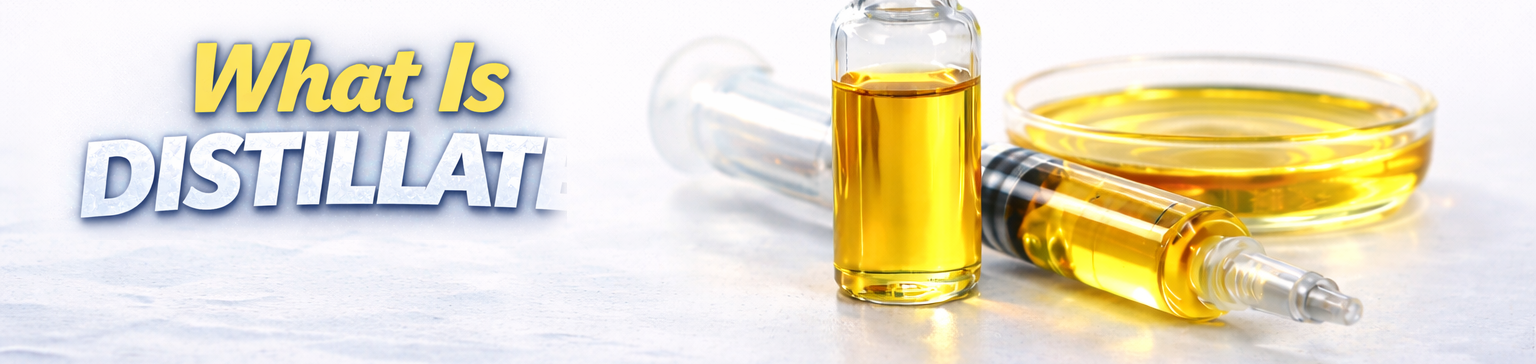
Distillate is a refined cannabinoid oil made by processing an extract until it becomes a potent, highly workable liquid centered around one primary cannabinoid. In plain shopping terms, it is the clean amber oil you often see in syringes, vapes, infused products, and formulation-ready ingredients.
It usually looks clear to amber and thick rather than waxy, sugary, or crystal-like. That visual difference is one reason it belongs in a different lane from shatter, crumble, badder, or diamonds.
Distillate is best understood as the refined, potency-forward oil lane of the concentrate category: simple, strong, and highly adaptable across many product formats.
History and context
Distillate became more common as extraction and post-processing methods improved and brands wanted ingredients that were easier to standardize in retail products. As the market expanded beyond jars of concentrate, distillate became useful for carts, edibles, tinctures, and infused pre-rolls because it could be measured and blended more consistently.
- Early concentrate era Formats like wax, shatter, and crumble introduced many shoppers to strong extracts before highly refined oil products became common.
- Refinement becomes a selling point As brands built more finished products, demand grew for an extract that looked clean, tested strong, and worked across product categories.
- Modern retail use Today distillate shows up in vapes, edibles, tinctures, syringes, and infused products where consistency and formulation flexibility matter.
How it works
Brands start with extracted cannabinoids and then refine the mixture further to remove more of the original plant compounds. The goal is to end up with a concentrated oil that is cleaner, more uniform, and easier to use in finished products.
That extra refinement is why distillate often looks smoother and more standardized than texture-heavy concentrates. It also explains why distillate can feel simpler than fuller formulas that keep more terpenes and other compounds in the mix.
What the evidence can and can’t say
The basic idea is well established: distillate is a refined cannabinoid oil built for potency and consistency. What is less settled is how every shopper will compare that simpler formula to fuller extracts that preserve more of the plant profile.
For a reader-first takeaway, the strongest evidence here is product form and chemistry rather than hype. Distillate clearly occupies the refined-oil lane, but “best” still depends on whether a shopper values consistency, flavor, or a broader extract profile.
- High refinement is the defining trait — distillate is built to be cleaner and more standardized than many texture-led concentrates.
- Consistency is part of the appeal — the same quality that helps brands make carts, tinctures, and edibles more repeatable.
- Refinement changes the profile — the cleaner the oil, the less it behaves like a fuller, more terpene-rich extract.
Types and common forms
Not every distillate product is sold the same way. The main differences come from format, added terpenes, and whether the product is a raw ingredient or a finished retail item.
- Raw distillate syringes — Sold as a concentrated oil for direct use or comparison shopping.
- Vape distillate — Common in carts and disposables, often with added terpenes for flavor.
- Edible or tincture formulas — Used when brands want a measured, repeatable cannabinoid ingredient.
- Infused products — Also found in pre-rolls and other items where potency and consistency matter.
How to use distillate in real life
In real life, distillate matters most when you are comparing formats and deciding what kind of experience you want. It helps explain why one product is sold as a syringe, another as a vape, and another as an edible ingredient.
- Decide whether you want a versatile oil or a fuller extract before you compare prices.
- Check whether terpenes are added back in, because that changes flavor and positioning.
- Use cannabinoid content, format, and lab access to compare products rather than marketing language alone.
Safety, legality, and what to watch for
Because distillate is sold across so many formats, label literacy matters. A shopper should know whether the product is raw distillate, a flavored vape, an edible ingredient, or a more finished formula before judging value.
Legality, age limits, testing rules, and product standards vary by state and by hemp-versus-marijuana framework. For any inhalable or ingestible product, clean contaminant testing and clear labeling matter more than dramatic branding.
Quality checklist (COA / lab reports)
A useful COA for distillate should do more than show a strong cannabinoid number. It should also help you understand what is in the oil, what has been removed, and whether the final product is clean enough for the format being sold.
- Match the product name to the format: raw distillate, vape formula, edible ingredient, and infused product should not all be treated as the same thing.
- Confirm cannabinoid potency and make sure the COA is recent, batch-specific, and easy to access.
- For solvent-made extracts, look for residual solvent results in addition to potency.
- Check contaminant panels such as pesticides, heavy metals, microbial impurities, and mycotoxins when available.
- If terpenes are added, the label and lab information should make that easy to understand.
- If the product is sold as a vape, the ingredients should make sense for inhalation and not read like a mystery blend.
- If flavor matters to you, compare terpene information instead of assuming all amber oils will taste similar.
- If the product is sold as “high potency,” make sure the price, lab data, and format actually justify the claim.
How to shop smarter
The smartest way to shop distillate is to compare it by lane: refined oil versus fuller extract. That helps you avoid judging it by the wrong standard.
- If you want cleaner flavor and formulation flexibility, distillate can make sense.
- If you want stronger aroma, strain personality, or a less stripped-down extract, compare live resin or rosin first.
- Use the label, the COA, and the final product type to decide whether a distillate product is priced fairly.
Common myths (and what’s actually true)
Distillate attracts a lot of simple marketing claims, but a few shortcuts lead shoppers astray.
- “Distillate is automatically the strongest option.” — Not always. It is potency-forward, but strength still depends on the product, serving size, and how it is used.
- “A cleaner-looking oil always means better quality.” — Not necessarily. Appearance matters less than lab testing, sourcing, and ingredient clarity.
- “Distillate and live resin are basically the same.” — No. They sit in different lanes: refined oil versus flavor-forward extract.
FAQ
Is distillate the same as live resin?
No. Distillate is more heavily refined and usually chosen for potency and flexibility, while live resin is usually chosen for terpene character and extract personality.
Why does distillate usually look clear or amber?
That clean oil look is one of the visual signs of a more refined cannabinoid product. The exact shade can vary, but distillate is typically smoother and more uniform than texture-led concentrates.
Where is distillate most commonly used?
Distillate is common in syringes, vapes, edibles, tinctures, and other infused products where consistency and formulation flexibility matter.