
In brief
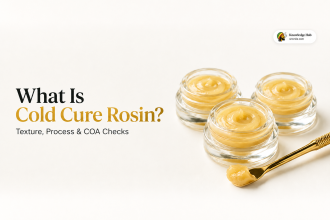
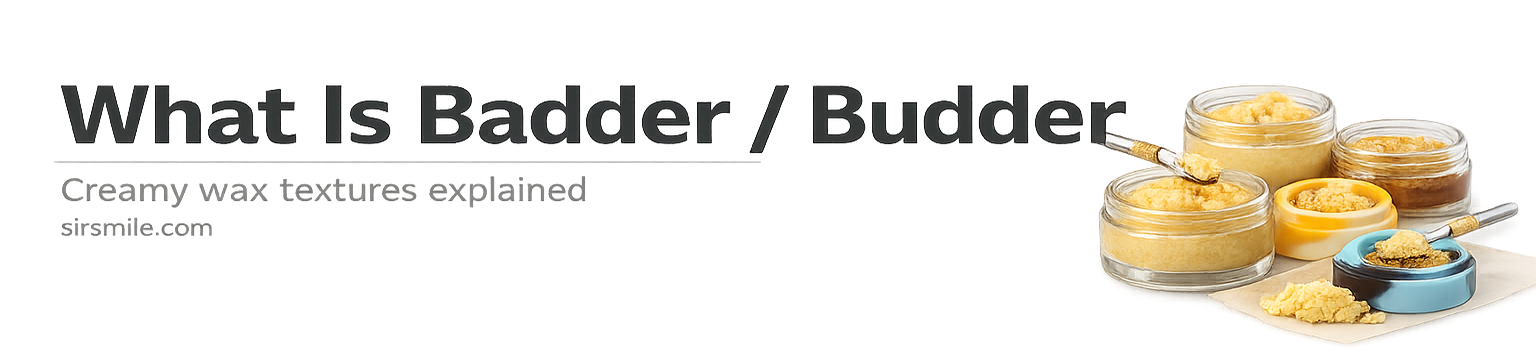
Badder (sometimes called batter) and budder are concentrate textures that look and handle like soft frosting or butter. They’re typically sold in small jars and portioned with a dab tool.
They’re not “tincture oils.” While they can get softer when warm or terpene‑rich, badder/budder are generally wax‑style, scoopable concentrates.
Definition
Badder/budder describes a consistency: a creamy, whipped concentrate that’s easy to scoop. It’s often chosen by beginners because it’s less brittle than shatter and less crumbly than crumble.
Color can range from pale blonde to golden or amber. Color alone isn’t a reliable quality test—starting material, processing, and storage can all affect appearance.
Badder/budder is a whipped, scoopable wax texture—easy to handle, but start small and prioritize clear labeling.
History and context
Whipped concentrate textures became more common as producers refined post‑processing to control consistency and terpene retention. Alongside better temperature‑controlled devices, badder/budder became popular because it’s easy to portion and handle compared to brittle or crumbly forms.
- Resin concentrates — Earlier concentrate forms focused on collecting resin (kief/hash). Modern “wax” textures are a newer layer on top of that same idea: concentrate cannabinoids and aroma into a smaller, stronger form.
- Texture control — As extraction and post‑processing improved, producers learned how agitation/whipping and terpene retention influence consistency—leading to creamy badder/budder textures.
- Consumer devices — Better temperature control (e‑rigs and portable devices) made whipped textures popular because they’re easy to portion and handle reliably.
How it works
Badder/budder is most often used for dabbing or in concentrate‑compatible devices (like some e‑rigs and concentrate pens). The key is using very small portions and a temperature that preserves flavor.
Lower temperatures generally taste smoother and more terpene‑forward; higher temperatures create thicker vapor but can feel harsher and flatten flavor.
What the evidence can and can’t say
Not all brands publish full details, but more transparency is usually better. If testing isn’t available, keep servings very small and stick to trusted brands.
For consumers, the most useful “evidence” is transparency: clear labeling plus third‑party testing when available.
- Cannabinoid potency (mg/g or %). — Helps you dose accurately.
- Terpene info (when provided). — Often correlates with aroma and perceived experience.
- Screening results. — Adds confidence in product cleanliness.
Types and common forms
You’ll see a few labels that overlap. These are common ways brands describe similar “whipped” textures:
- Badder / Batter — A soft, creamy, scoopable texture—often the most “frosting‑like.”
- Budder — Usually a bit more aerated/whipped; can feel slightly lighter or fluffier depending on the batch.
- Whipped Wax — A catch‑all label for wax that’s been whipped/agitated into a creamy consistency.
- Sugar / Sauce (related, not the same) — More “wet” and terpene‑heavy; still wax‑adjacent but typically less whipped and more granular/saucy.
How to use Badder/Budder in real life
Because concentrates can be potent, start tiny and increase slowly only if needed.
- Start with a grain‑of‑rice sized portion (or smaller).
- Keep the lid closed—air exposure can dry the surface and reduce aroma.
- Use a clean dab tool to avoid mixing debris into the jar.
- Store cool and away from light to help preserve terpenes and texture.
Safety, legality, and what to watch for
The biggest beginner issue is taking too much too fast. Concentrates can feel strong quickly when inhaled.
Prefer products with clear labeling and, when available, third‑party testing that lists cannabinoid content and basic screening.
Quality checklist (COA / lab reports)
Good badder/budder should smell clean, have a consistent whipped texture for its style, and come in packaging that seals well.
- Choose a whipped, scoopable texture you can handle easily.
- Start with a very small portion.
- Use moderate temperatures for smoother flavor.
- Prefer clear labels and testing when available.
- Store sealed, cool, and away from light.
- Look for clear cannabinoid content and batch details.
- Avoid vague labels or mystery additives.
- Aroma should be strain‑like, not harsh or chemical.
- Choose airtight containers; heat and air can change texture and aroma.
How to shop smarter
When shopping, choose a texture you can handle easily and that matches your device. Whipped textures are usually beginner‑friendly because they scoop cleanly.
- If you’re new, pick a stable, creamy badder/budder (not overly saucy).
- If flavor matters most, look for terpene‑forward but clearly labeled products.
- Skip products without basic details (strain/type, content, batch info).
- If lab results are provided, confirm they match the product or batch.
Common myths (and what’s actually true)
A few common myths about badder/budder:
- “Budder is always stronger than badder.” — Texture doesn’t guarantee potency—check the label or lab results when available.
- “Only pale yellow badder is high quality.” — Color can vary with starting material and processing; darker doesn’t automatically mean worse.
- “If it’s soft/runny, it must be cut with oil.” — Terpene-rich batches can be softer, especially when warm. Look for clear ingredients/labeling rather than judging by softness alone.
FAQ
Is badder the same as budder?
They’re closely related. Both describe whipped, scoopable textures. Some brands use the words interchangeably, while others use budder for a slightly more aerated/whipped consistency.
Why is my badder darker than another jar?
Color can vary due to starting material, terpene content, processing, and storage. Color alone isn’t a reliable quality test.
How do I store badder/budder?
Keep it sealed, cool, and out of light. Heat and air can change texture and aroma over time.