
In brief
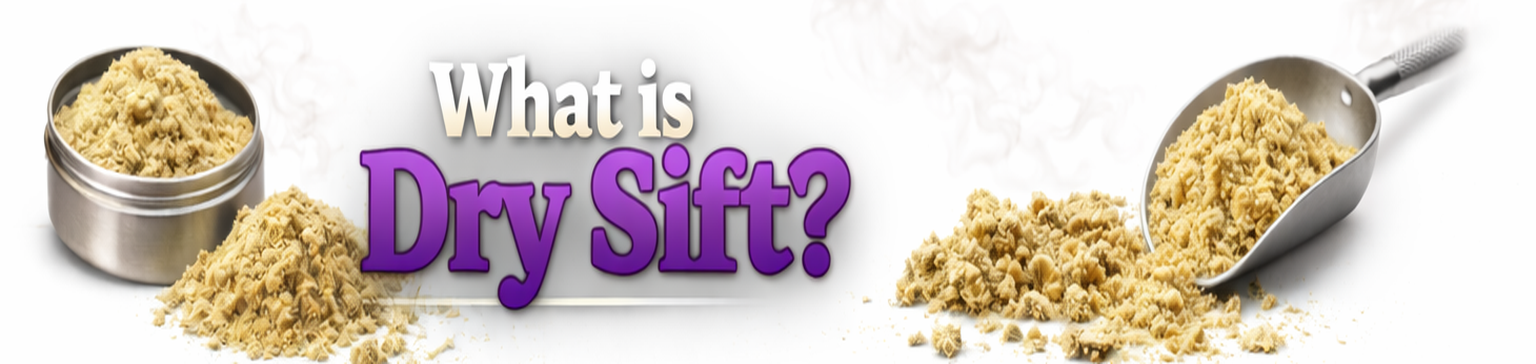
Dry sift is a concentrate made by separating trichomes from flower through dry screening. It is usually lighter, looser, and more powdery than denser pressed concentrates.
That matters because dry sift sits earlier in the concentrate chain than hash and hash rosin. If you understand that sequence, the category becomes much easier to shop.
Definition
Dry sift is the screened trichome material itself. It is not the same thing as denser hash and it is not the same thing as hash rosin, which comes later as a solventless pressed extract.
That is why dry sift should be treated differently from denser hash or from solventless extracts like hash rosin. Dry sift is the earlier, looser concentrate stage rather than the later pressed product.
Dry sift is best understood as the separated trichome material before it becomes a denser pressed hash or a solventless extract like hash rosin.
Context
Dry sift matters because it helps explain the earlier stage in the concentrate chain. Once a shopper understands dry sift, the relationship between sift, hash, and hash rosin becomes much easier to follow.
- Starting point — Dry sift begins with separating trichomes through screening.
- Next step — That material can later be compressed into denser hash.
- Later product path — Hash can then be pressed into hash rosin, which belongs in its own later lane.
How it works
The goal is to separate trichomes through screening rather than pressing them immediately into another product. The result is a lighter, more granular concentrate that can vary in cleanliness and grade depending on how carefully the material is handled.
Because dry sift stays closer to the separated trichome stage, it does not look or behave like a jarred rosin or a denser pressed concentrate.
What the evidence can and can’t say
The strongest claims around dry sift are about how it is collected and how cleanly the trichomes were separated. Quality depends on method, grade, and handling, not just on the product name.
The best reader-first takeaway is that dry sift is real concentrate material, but it should be judged by cleanliness and source clarity instead of hype words.
- Dry sift is defined by screened trichome separation rather than by pressing or refining into oil.
- Texture and cleanliness vary from one product to another.
- The simpler question is not “is it strong?” but “how cleanly was it separated and presented?”
Texture and common forms
Dry sift usually appears as lighter, loose, granular concentrate material. The exact look can still vary depending on how much plant material remains and how carefully the trichomes were separated.
- Loose sift — lighter, more powdery or granular material.
- Cleaner grades — more refined separation with less plant residue.
- Dirtier grades — more mixed material and less pure sift.
How to use dry sift in real life
In real-life shopping, dry sift matters most when you are trying to understand the earlier concentrate stage instead of jumping straight to denser hash or solventless extracts.
- Start by deciding whether you want sift itself or a later product made from it.
- Use appearance, cleanliness, and testing to compare products, not just names.
- Do not assume every sift-like product is equally clean or equally refined.
Safety, legality, and what to watch for
Dry sift should be judged by cleanliness, handling, source transparency, and testing. A product name alone does not tell you how cleanly the trichomes were separated.
As with any concentrate, rules and standards vary depending on state law and product framework. Clear descriptions and accessible testing matter more than dramatic naming.
Quality checklist (COA / lab reports)
A useful COA for dry sift should confirm potency and help you understand how clean the product is. Because dry sift can vary by grade, clarity matters.
- Check potency and cannabinoid profile with a recent batch-specific COA.
- Look for contaminant screening where available.
- Read how the product describes grade, cleanliness, and trichome separation.
- Use appearance as a clue, but not as the only proof of quality.
- Make sure you are not confusing dry sift with hash or hash rosin, which belong later in the chain.
- Loose, lighter material should not be judged the same way as dense pressed concentrates.
- Clarity, cleanliness, and testing matter more than hype words.
- The best listings tell you what stage of the concentrate chain you are buying.
How to shop smarter
The smartest way to shop dry sift is to compare it by stage. Once you know it sits earlier than hash and hash rosin, product descriptions become easier to judge.
- If you want the screened trichome material itself, shop dry sift.
- If you want the denser concentrate that comes later, shop hash.
- If you want the solventless extract made from hash, shop hash rosin.
Common myths (and what’s actually true)
Dry sift gets misunderstood most often when shoppers use sift, hash, and hash rosin as if they all meant the same thing.
- “Dry sift and hash are the same.” — They are related, but they are not the same product stage.
- “Dry sift and hash rosin are the same.” — No. Hash rosin comes later, after hash is pressed into a solventless extract.
- “Every sift product is equally clean.” — Quality and cleanliness vary based on the method and grade.
FAQ
Is dry sift the same as hash?
No. Dry sift is the earlier screened material, while hash is denser and comes later.
Is dry sift the same as hash rosin?
No. Hash rosin is a later solventless extract made after hash has already been formed.
Why can dry sift look different from one product to another?
Because cleanliness, grade, and separation method change the final texture and appearance.