
In brief
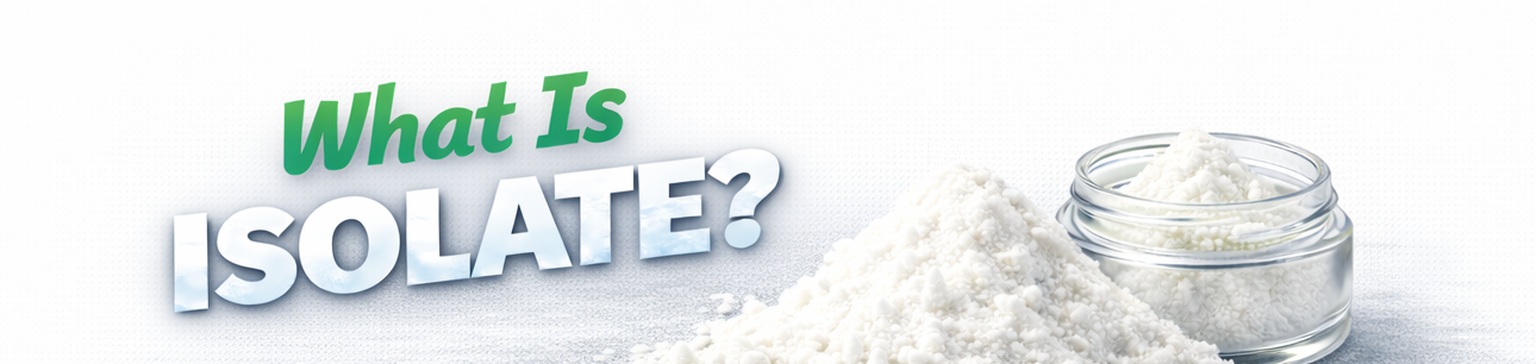
Isolate is a highly refined cannabinoid extract made to contain one primary cannabinoid with very little else left behind. In hemp shopping, that usually means CBD isolate: a white powder or crystal designed for clean formulas, lighter flavor, and simple ingredient panels.
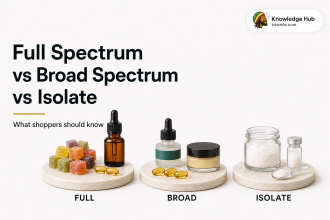
That matters because isolate sits at the stripped-down end of the spectrum. It is different from broad spectrum and full spectrum products, which are built to keep more of the plant’s original mix of cannabinoids, terpenes, and other compounds together.
Definition
Isolate is a purified cannabinoid ingredient that is refined until one main cannabinoid remains in high concentration while most other plant compounds are removed. In everyday hemp shopping, that usually means CBD isolate, which is often sold as a white powder, crystal, or blended ingredient in finished products.
It is best understood as the opposite end of the spectrum from fuller extracts. Instead of keeping a broad mix of cannabinoids and terpenes together, isolate is built for a single-compound, stripped-down profile that is easier to formulate, easier to flavor, and easier for shoppers to compare by milligrams alone.
History and context
Isolate became more common as extraction and post-processing improved. Once brands learned how to separate, winterize, filter, and refine cannabinoids more aggressively, it became possible to create powders and crystals that looked far more uniform than older, whole-extract products.
- Early extract era — Shoppers first learned the category through fuller extracts, oils, waxes, and other concentrates that carried more of the plant’s original mix.
- Refinement era — Better processing made it easier to remove waxes, pigments, terpenes, and other minor compounds.
- Ingredient era — Isolate became especially useful for gummies, capsules, drink mixes, and products where brands wanted cleaner flavor and more standardized dosing.
How it works
The basic idea is simple: start with a cannabinoid-rich extract, then refine it step by step until most of the non-target compounds are removed. Depending on the starting material and process, that can include winterization, filtration, distillation, and crystallization.
That is why isolate often appears as a white powder or crystal. The visual look reflects how stripped-down the ingredient has become. It is built to be measured, blended, and used as a standardized cannabinoid input rather than marketed for terpene richness or strain character.
What the evidence can and can’t say
A reader-first takeaway is this: the strongest claims around isolate are about composition and formulation, not magic. It is easier to understand by ingredient profile than by hype. When a brand says “isolate,” the most useful question is usually: what was removed, and why?
- High purity is the defining trait — isolate is marketed around its stripped-down cannabinoid profile.
- Flavor is usually lighter — removing more of the plant profile often means less hemp or cannabis taste.
- Format still matters — isolate in a powder, gummy, capsule, tincture, or topical can feel very different in real-life use.
Types and common forms
Not every isolate product looks the same, even when the ingredient category is the same. The biggest differences come from delivery format, whether the isolate is sold loose or blended, and whether the product is built for simple ingredient transparency or convenience.
- Loose isolate powder or crystal — the most direct format for understanding what isolate actually looks like.
- Tinctures and capsules — easier for consistent serving sizes and daily routines.
- Edibles and drink products — useful when a brand wants cleaner flavor and a simpler ingredient profile.
- Topicals and beauty products — often chosen when a formula is being built around one cannabinoid instead of a broader hemp extract.
How to use isolate in real life
In real life, isolate matters most when you are comparing product labels. It helps explain why one gummy tastes lighter than another, why one tincture looks simpler on the ingredient panel, or why a powder is being sold as a mix-in rather than as a broad hemp extract.
- Start by asking whether you want a minimal formula or a broader extract before you compare brands.
- Use isolate when clean ingredient panels, lighter flavor, or simple blending matter more than terpene richness.
- Compare products by milligrams per serving and total cannabinoid content, not just by package size.
- If you are looking at powders, check whether the brand gives practical serving guidance rather than leaving dosing completely vague.
Safety, legality, and what to watch for
Because isolate sounds clean and simple, shoppers sometimes assume it answers every safety question by itself. It does not. A product can still be poorly labeled, weakly tested, or built with ingredients that are not a good fit for your goals.
Legality, age limits, cannabinoid rules, and testing standards can vary by state, product type, and whether the item is sold as hemp or cannabis. A better safety habit is to read the COA, ingredients, serving size, and cannabinoid profile together instead of relying on the word “isolate” alone.
Quality checklist (COA / lab reports)
A useful COA for isolate should do more than show one big number. Because isolate is sold as a purified ingredient, the lab report should help confirm both what is present and what was removed during refinement.
- Match the product name to the chemistry: if it is sold as isolate, the cannabinoid profile should make sense for a single-compound product.
- Check potency per gram or per serving so the number on the label actually translates into a usable serving size.
- Look for residual solvent, heavy metal, pesticide, and microbial screening rather than potency alone.
- If the product claims to be THC-free or near-zero THC, the COA should support that claim clearly.
- Finished products should still list other ingredients, sweeteners, carrier oils, or added flavors in a readable way.
- Loose powders should have clear handling and serving information, not just a purity number.
- Finished products should connect label claims, serving size, and total milligrams in a way that is easy to follow.
- A premium price only makes sense if the testing, formulation, and usability are also premium.
How to shop smarter
The smartest way to shop isolate is to compare by lane: loose ingredient lane, simple daily-use lane, and convenience-product lane. That keeps you from overpaying for branding when the actual differentiator is just delivery format.
- If you want a cleaner ingredient profile and lighter taste, isolate can make sense.
- If you want a broader plant profile, compare isolate side by side with broad spectrum and full spectrum before buying.
- Compare cost by price per milligram, not just package price.
- For powders, ask whether the product is truly practical for you to measure and use, or whether a pre-portioned format would be easier.
Common myths (and what’s actually true)
Isolate attracts its own shortcuts and myths. The most common mistake is treating “cleaner” as if it automatically means “better” for every shopper. In practice, isolate is just one lane in the category, and it fits some use cases better than others.
- “Isolate is automatically better than full spectrum.” — Not necessarily. It is simply more stripped down.
- “Isolate always means CBD isolate.” — Often, yes in hemp shopping, but the term isolate can describe other purified cannabinoids too.
- “A white powder means quality by itself.” — Appearance is not enough. Quality still comes from testing, transparency, and labeling.
- “Isolate tells me how the product will feel.” — Not by itself. Format, serving size, and other ingredients still matter.
FAQ
Is isolate the same thing as full spectrum?
No. Isolate is built around one primary cannabinoid, while full spectrum aims to keep a wider mix of cannabinoids, terpenes, and other plant compounds together.
Does isolate always mean CBD isolate?
In many hemp products, yes, that is what shoppers usually mean. But the term isolate can also describe other purified cannabinoids, so the label should always tell you exactly which cannabinoid is being sold.
Why does isolate usually look like white powder?
Because it has been refined down to a very stripped-down ingredient form. That white powder or crystal look is one of the visual signs that the product is being sold as a purified cannabinoid ingredient instead of a broader extract.