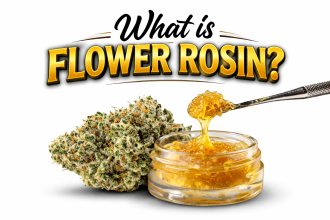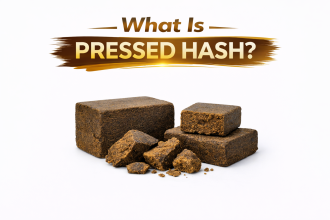


In brief
Live rosin is a solventless cannabis concentrate made by pressing ice‑water hash (bubble hash) from fresh‑frozen flower. It’s known for bold aroma and “strain‑true” flavor when it’s fresh and stored well.
It’s different from live resin: live rosin is made without hydrocarbons, while live resin is typically solvent‑extracted and then purged. Both can be excellent—just made with different methods and tradeoffs.
Definition
Live rosin starts with fresh‑frozen cannabis that’s washed in ice water to separate trichome heads. Those trichomes are collected as bubble hash and then pressed to release a terpene‑rich resin.
Because it’s solventless, quality is driven by starting material, washing skill, press parameters, and storage. Texture can change over time, so appearance alone isn’t a quality guarantee.
Expect terpene‑forward flavor and a range of textures (fresh press, badder, jam), with potency that can vary by batch.
History and context
Modern live rosin combines fresh‑frozen starting material (to help preserve aroma compounds) with solventless rosin pressing (heat + pressure). As washing, filtration, and storage practices improved, producers could make cleaner hash and press it into more consistent rosin textures.
- Fresh‑frozen flower Plant material is frozen soon after harvest, helping retain volatile aroma compounds.
- Ice‑water hash (bubble hash) Trichome heads are separated in cold water and collected as hash before pressing.
- Heat + pressure press Hash is pressed through a fine filter to release rosin without solvents.
How it works
Most live rosin is made in two steps: (1) fresh‑frozen flower → ice‑water wash → bubble hash, then (2) bubble hash → filtered bag → gentle heat + pressure press → rosin.
Temperature, press time, and filtration affect yield and texture. Some batches are kept as glossy fresh press, while others are cured or whipped into more stable forms.
What the evidence can and can’t say
Potency and effects vary by cultivar and batch. A small dab can feel strong—start with less than you think you need and adjust slowly.
Live rosin is defined by process (solventless) rather than a specific potency. Its strengths are often flavor and aroma, while its downsides are cost and lower yield compared with many solvent extracts.
- Solventless method — Made with ice‑water separation and pressing—no hydrocarbons used in extraction.
- Fresh‑frozen input — Using frozen starting material can help preserve aromatic compounds that affect flavor.
- Texture diversity — Fresh press, badder, and jam are common presentations depending on curing and handling.
Types and common forms
Live rosin shows up in several common textures. The same batch can look different depending on curing, handling, and storage temperature.
- Fresh press — Glossy and sappy right after pressing; can “sugar up” as it ages or warms.
- Cold‑cure badder — Whipped, creamy texture that’s easier to handle and often more stable day‑to‑day.
- Rosin jam — Semi‑crystallized cannabinoids suspended in terpene‑rich sauce; intensely aromatic.
- Solventless rosin vape — Convenient hardware filled with rosin; flavor depends heavily on device quality and temperature.
How to use live rosin in real life
Most people consume live rosin by dabbing, where vapor is inhaled from a concentrate device. Because concentrates are strong, small amounts go a long way—especially if you’re new.
- Start with a tiny amount; you can always increase later.
- Lower temperatures tend to preserve terpenes and feel smoother than very hot settings.
- Use a dab tool and parchment for handling—rosin can be sticky depending on texture.
- Seal it tightly and store cool to help preserve aroma and consistency.
Safety, legality, and what to watch for
Concentrates can be very potent. If you’re sensitive or new, avoid large hits and give yourself time to assess effects in a comfortable setting.
Follow local laws. Avoid driving or operating machinery if you feel impaired, and be cautious if you’re mixing with alcohol or taking medications—when in doubt, ask a clinician.
Quality checklist (COA / lab reports)
A good live rosin usually smells fresh and strain‑like, melts cleanly, and comes with transparent sourcing and testing. Storage matters: warm shelves can dull flavor quickly.
- Solventless (no hydrocarbons)
- Fresh‑frozen starting material
- Pressed from ice‑water hash
- Airtight + cool storage helps
- Very potent—start small
- Check for a COA/lab report (cannabinoids + contaminants) and a clear batch/press date if available.
- A strong, natural aroma is a good sign—stale, muted, or “off” smells can indicate age or poor storage.
- Texture varies by process (fresh press vs badder vs jam). Pick a texture you can handle and store properly.
- Prefer products stored cool and packaged airtight; repeated warming/cooling can change consistency.
How to shop smarter
Shopping for live rosin is mostly about freshness, storage, and transparency. Two jars labeled “live rosin” can be wildly different if one is old or stored warm.
- Ask how it was stored (cool storage is a plus) and how recently it was produced.
- Look for solventless labeling plus full contaminant testing—not just cannabinoid potency.
- If you’re new, choose a stable texture like cold‑cure badder before trying sticky fresh press.
- Smell and consistency matter—avoid jars that look dried out, crusty, or smell flat.
Common myths (and what’s actually true)
A few myths lead people to buy the wrong jar or store it poorly—here are the most common.
- “Live rosin and live resin are the same thing.” — They’re different: live rosin is solventless (hash + press); live resin is usually solvent‑extracted and then purged.
- “Lighter color always means better quality.” — Color varies by cultivar and process. Aroma, melt cleanliness, storage history, and lab results are more reliable signals.
- “If it’s rosin, storage doesn’t matter.” — Storage matters a lot—heat and air exposure can quickly dull flavor and change texture.
FAQ
Is live rosin the same as live resin?
No. Live rosin is solventless (ice‑water hash pressed into rosin). Live resin is typically solvent‑extracted from fresh‑frozen material and then purged.
What textures can live rosin have?
Common textures include glossy fresh press, whipped cold‑cure badder, and jam-like rosin with a saucy terp layer.
How should I store live rosin?
Keep it airtight and away from heat and light. Many people store it cool to help preserve aroma and maintain texture.