
In brief
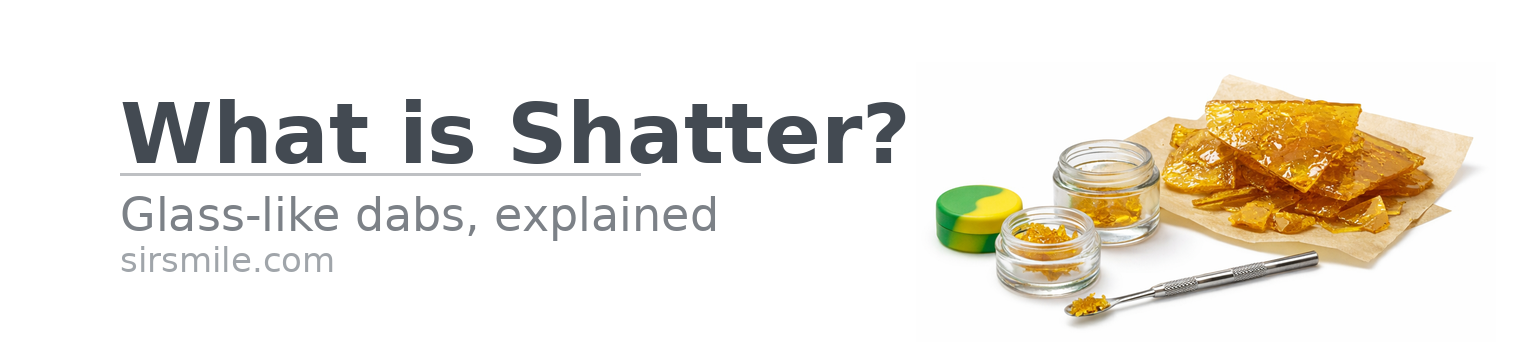
Shatter is a glass-like cannabis concentrate known for its clear, brittle “snap” when cool and its sticky softness when warmed by your fingers.
People like it because it can be potent, portionable, and clean-tasting when it’s well-made and properly tested.
Definition
Shatter is a type of cannabis concentrate that typically sets into a translucent sheet or shard. The “shatter” name comes from the way it can crack or snap when it’s cool.
Texture varies by formulation and handling—terpenes, residual plant waxes, and how the oil cools can shift it from true snap-and-break shatter toward a softer pull-and-snap consistency.
Key takeaway: shatter is a glass-like concentrate—verify it with a COA, start with tiny amounts, and store it cool and airtight.
History and context
Glass-like concentrates became popular as extraction technology and lab testing improved, making it easier for brands to standardize potency and reduce unwanted residues. Today, “shatter” is one of several concentrate textures you’ll see alongside wax, budder, crumble, and resin-style extracts.
- Onset With inhaled concentrates, effects can begin within seconds to a few minutes, depending on temperature and device.
- Peak Many people feel the strongest effects within ~10–30 minutes; dose size matters a lot with concentrates.
- Total duration Commonly 1–3 hours of main effects with a longer tail (often up to ~4–6 hours), varying by tolerance and dose.
How it works
Most shatter is made by extracting cannabinoids and terpenes from cannabis or hemp, then refining and purging the extract until it can set into a stable, glass-like sheet.
The exact look depends on chemistry and process control—how thoroughly solvents are removed (if used), how much terpene remains, and whether the oil crystallizes (nucleates) as it cools.
What the evidence can and can’t say
Research and regulations vary by region, and product quality differs between brands. When in doubt, choose items with transparent batch testing and conservative claims.
Here are a few evidence-informed points that can help you interpret what you’re buying and why shatter behaves the way it does:
- Potency is typically much higher than flower — Concentrates often contain far more cannabinoids per gram, so dose size becomes the main driver of intensity.
- Texture depends heavily on terpenes and crystallization — Higher terpene content and warmer storage can push shatter toward a softer pull-and-snap feel; nucleation can change clarity over time.
- Lab testing matters more than color — Clarity and amber tone don’t guarantee purity; a COA is the best way to check potency and contaminants.
Types and common forms
Although “shatter” is a texture, you’ll see a few common variations in shops:
- Classic shatter — Hard, glassy, and brittle when cool; usually comes as a thin sheet you can snap into pieces.
- Pull-and-snap — Slightly softer and more flexible; it stretches a bit before breaking, often due to higher terpene content or warmer storage.
- Taffy / sap-leaning shatter — More pliable and sticky; still “shatter-like” but less likely to break cleanly into shards.
- Hemp/CBD shatter — A similar glass-like texture made with hemp-derived cannabinoids; always verify potency and residual-solvent results on a COA.
How to use shatter in real life
Because shatter is firm, it’s often easiest to portion when it’s cool. People typically use it by vaporizing a tiny piece in a concentrate vaporizer or dab rig, aiming for moderate temperatures to preserve flavor.
- Use a very small amount at first—concentrates can be much stronger per inhale than flower.
- Handle it on parchment paper or with a dab tool to keep it clean and less sticky.
- Lower temperatures generally taste better and feel smoother than very hot hits.
- Store portions you’re not using in an airtight container in a cool, dark place.
Safety, legality, and what to watch for
Shatter is a high-potency product and isn’t ideal for everyone. If you’re new to concentrates, start with a tiny amount and choose a setting where you can go slow.
Keep concentrates away from kids and pets, and follow local laws and age restrictions. This guide is informational and not medical advice.
Quality checklist (COA / lab reports)
Good shatter should be accurately labeled, lab-tested, and stored properly. Color and clarity can vary, so the most reliable indicator of quality is a recent certificate of analysis (COA) that lists cannabinoid potency and checks for contaminants.
- A recent COA that includes potency and contaminant screening
- Clear batch/lot information and brand transparency
- No harsh chemical odor; clean aroma and packaging
- Storage that protects from heat and light
- A realistic plan for dosing small (especially if new)
- Look for a COA with cannabinoid totals plus residual-solvent results (when applicable).
- Avoid products with no batch info, no test date, or vague “lab tested” claims without a report.
- Check packaging: airtight, light-resistant containers help preserve texture and terpenes.
- If it smells harsh or chemical, skip it—clean concentrates shouldn’t have solvent-like odors.
How to shop smarter
When shopping for shatter, prioritize transparency and testing over looks. A reputable brand should make potency and safety information easy to find.
- Choose products with clear cannabinoid potency and a recent COA.
- If buying online, confirm the seller’s return/refund policy and shipping restrictions for your area.
- Prefer brands that list ingredients and extraction method clearly (without making medical claims).
- If you want less intensity, consider lower-THC options or hemp-derived alternatives with verified testing.
Common myths (and what’s actually true)
A few common ideas about shatter sound believable—but they’re not always accurate.
- “Clear shatter is always higher quality.” — Clarity can be influenced by processing and terpene content; quality is better judged by testing and handling.
- “Shatter is always solvent-free.” — Most classic shatter is made with a solvent-based extraction and then purged; the COA should show residual-solvent results where relevant.
- “Hotter hits are stronger and better.” — Very high temperatures can taste harsh and degrade flavor; moderate temps are often smoother while still effective.
FAQ
Is shatter the same thing as wax?
Not exactly. Shatter describes a glass-like, brittle texture, while wax is usually softer and more opaque; both are concentrates, but they handle and portion differently.
Does shatter always involve solvents?
Most traditional shatter is made with hydrocarbon extraction and then purged. Always check a COA for residual-solvent results and other safety testing where applicable.
How should I store shatter so it stays stable?
Keep it in an airtight container in a cool, dark place, ideally on parchment paper. Heat and frequent handling can make it stickier and change texture over time.