
In brief
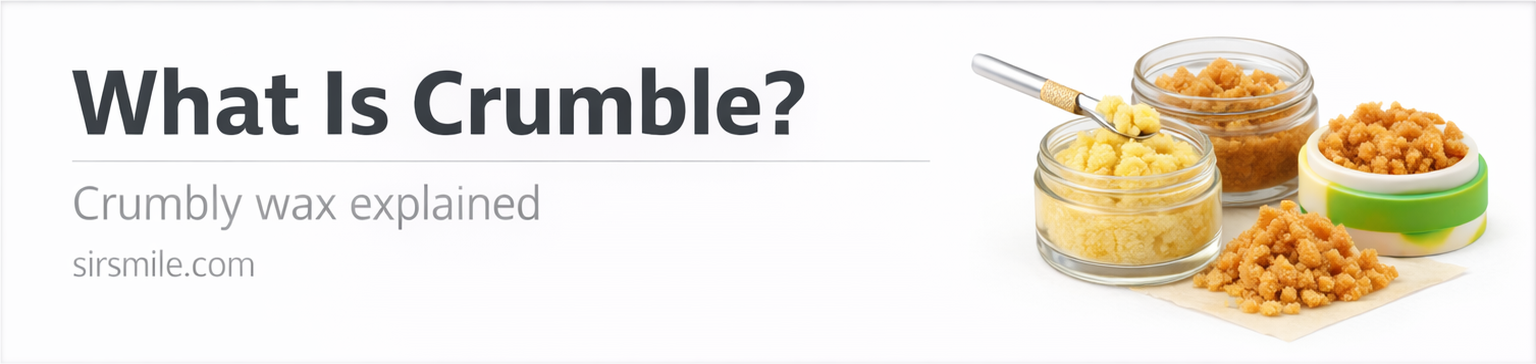
Crumble is a type of cannabis concentrate with a dry, airy, “breakable” texture. It often looks like small chunks or granules that easily fall apart—hence the name.
Compared with creamy badder/budder, crumble typically has less moisture and can feel more crumbly or honeycomb-like. It’s still potent, so portions are usually very small.
Definition
In simple terms, crumble is a wax-style concentrate that breaks apart easily instead of staying whipped or sticky. Many people like it because it’s easy to pinch off small pieces with a tool.
Color commonly ranges from pale blonde to golden or amber/tan. Color alone isn’t a reliable quality indicator—starting material, processing, and storage can all change appearance.
Crumble is a dry, breakable concentrate—start small, use moderate temps, and prioritize clear labeling.
History and context
As extraction and post‑processing improved, producers learned how factors like purging, agitation, and terpene retention affect texture. Alongside consumer devices with better temperature control, dry wax textures like crumble became popular because they’re easy to portion into small amounts.
- Resin concentrates — Earlier concentrate forms focused on collecting resin (kief/hash). Modern wax textures build on the same idea: concentrate cannabinoids and aroma into a smaller, stronger form.
- Texture control — As processing improved, producers learned how terpene retention and post‑processing influence consistency—leading to creamy, sugary, and drier textures like crumble.
- Device adoption — Better temperature control (e‑rigs and portable devices) made concentrates easier to use and increased the importance of clear labeling and testing transparency.
How it works
Crumble is most commonly used for dabbing, but some people also add small amounts to flower (for example, layering it between ground flower) if local rules and personal preferences allow.
Temperature matters. Lower temperatures can preserve flavor and feel smoother; higher temperatures create thicker vapor but can feel harsher and may dull terpene taste.
What the evidence can and can’t say
Not every product will publish all details, but more transparency is usually better. If testing isn’t available, keep servings very small and stick to trusted brands.
For consumers, the most useful “evidence” is transparency: clear labeling plus third‑party testing when available.
- Cannabinoid potency (mg/g or %). — Helps you dose accurately and compare products.
- Terpene info (when provided). — Often correlates with aroma and perceived experience.
- Screening results. — Adds confidence in overall product cleanliness.
Types and common forms
Crumble usually describes texture, but you’ll still see a few common variations:
- Dry crumble — Very dry and crumbly; breaks into small pieces easily and can be sprinkled or “sandwiched” into flower.
- Moist crumble — Still breakable but slightly tacky; often easier to handle without creating tiny crumbs.
- Honeycomb-style — Airier and more porous, with a honeycomb look; tends to snap into chunks.
- Crumble vs sugar (often compared) — Sugar concentrates look grainy but are usually wetter/“saucier” due to higher terpene content.
How to use Crumble in real life
Because concentrates can be strong, start tiny and increase slowly only if needed.
- Start with a crumb smaller than a grain of rice.
- Use a dab tool—fingers can warm crumble and make it messy.
- Keep surfaces clean to avoid burnt residue and off flavors.
- Store sealed and cool to help preserve aroma and texture.
Safety, legality, and what to watch for
The biggest beginner issue is dosing—taking too much too fast is common with concentrates.
Prefer products with clear labeling and, when available, third‑party testing that lists cannabinoid content and basic screening.
Quality checklist (COA / lab reports)
Good crumble should have a consistent dry/breakable texture for its style, smell clean (not chemical), and come from brands that provide clear product details.
- Pick a texture that matches your device and comfort level.
- Start with a very small portion.
- Use moderate temperatures for smoother flavor.
- Prefer clear labels and testing when available.
- Store sealed, cool, and away from light.
- Look for clear cannabinoid content and batch info when possible.
- Avoid products with vague ingredients or unclear processing.
- Aroma should be strain‑like, not harsh or “solvent‑y.”
- Choose airtight containers; air and heat can change texture and aroma over time.
How to shop smarter
When shopping, match crumble’s texture to your device and comfort level. Dry crumble is easy to portion, but tiny crumbs can be messier than creamy waxes.
- If you want easy scooping, consider badder/budder instead of very dry crumble.
- If you like “pinch‑off” portions, crumble can be convenient.
- Skip deals with unclear labeling or no product details.
- If lab results are provided, confirm they match the product or batch.
Common myths (and what’s actually true)
A few common myths about crumble:
- “Crumble is always old wax.” — Not necessarily. Some batches are made to be dry and porous; texture depends on processing and terpene content.
- “Lighter color always means higher quality.” — Color can vary for many reasons; clear labeling and testing (when available) matter more than shade.
- “Crumble can’t be flavorful.” — Some crumble is terpene‑forward, but drier textures may feel less aromatic than saucier concentrates—batch matters.
FAQ
Is crumble stronger than badder or budder?
Texture doesn’t guarantee potency. Check the label or lab results when available—crumble can be stronger, similar, or lower depending on the batch.
Why is my crumble so dry?
Dryness is part of the texture. Lower terpene content, processing, and storage conditions can make crumble feel drier and more breakable.
How should crumble be stored?
Keep it sealed, cool, and out of light. Heat and air exposure can change texture and aroma over time.