
In brief
Delta-8 THC is a THC-related cannabinoid that sits close to Delta-9 in structure, but it’s usually sold as hemp-derived products. This guide explains what it is, how formats differ, and what to check for quality and safety—without hype or medical claims.
Delta‑8 THC is a THC‑related cannabinoid commonly sold in gummies, vapes, and tinctures. Most products are made from hemp CBD via conversion—so potency and purity depend on transparent lab testing.
Definition
Delta‑8 THC (delta‑8‑tetrahydrocannabinol) is a cannabinoid that can produce THC‑style effects, often described as gentler or “smoother” than delta‑9 THC by some consumers.
Because natural delta‑8 occurs in hemp in very small amounts, many retail products are made by converting hemp‑derived CBD into delta‑8, then refining and testing the final distillate before it’s used in gummies, vapes, or tinctures.
Treat delta‑8 as a “format + quality” decision: choose the product type that fits your pace, and only buy if a real COA matches the batch.
History and context
Delta‑8 has been discussed in cannabis research for decades, but it became widely sold after hemp products expanded in the late 2010s.
- 2018–2019 — Hemp products expand, and consumer interest in minor cannabinoids grows.
- 2020–2022 — Converted cannabinoids (including delta‑8) appear broadly in vapes and edibles; testing quality varies by brand.
- 2023–today — State rules continue to change; reputable brands emphasize COAs, contaminant panels, and transparent sourcing.
How it works
Delta‑8 interacts with the body’s endocannabinoid system, including receptors linked with mood and perception. Like other THC‑type cannabinoids, effects can depend on dose, tolerance, and setting.
The way you take it matters: inhaled formats are typically felt faster, while swallowed formats must be processed first and can take longer to notice.
What the evidence can and can’t say
Research on delta‑8 in everyday products is limited compared with delta‑9 THC and CBD. A lot of what people “know” comes from consumer surveys, small studies, and lab testing—so it’s best to keep expectations realistic and prioritize safety and product quality.
When brands publish full lab reports (COAs) and contaminant panels, you can compare products more confidently. Without that documentation, it’s hard to verify what’s in the package.
- Potency isn’t standardized — Serving sizes and labeled mg can vary a lot between brands and formats.
- Route changes the experience — Edibles tend to come on slower and last longer; inhaled formats are usually quicker and shorter.
- Purity matters more for converted cannabinoids — Conversion and refining should be backed by contaminant testing (solvents, heavy metals, pesticides) and clear batch matching.
Types and common forms
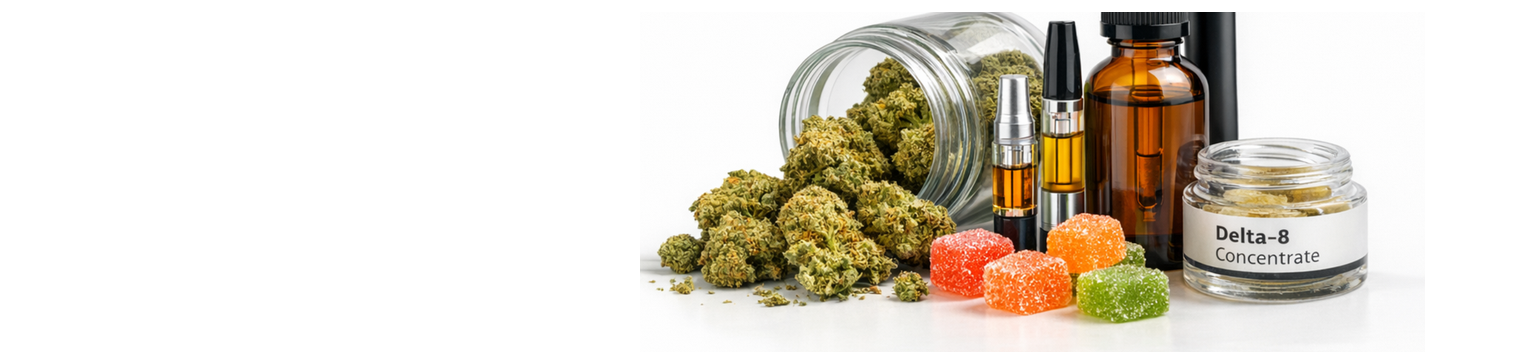
Most shoppers encounter delta‑8 in a few main formats. Each format has a different “feel” because onset and duration differ.
- Gummies & other edibles — Convenient and discreet; typically slower onset and longer‑lasting.
- Vapes — Fast onset for many users; effects may fade sooner—quality and hardware matter.
- Tinctures — Flexible dosing; timing sits between edibles and inhaled products for many people.
- Capsules — Simple, consistent servings; similar timing to other swallowed formats.
Compare formats at a glance
Feel: steady, slower-onset
Timing: slower start, longer window
Best fit: evenings, longer breaks
Feel: fast-onset, adjustable
Timing: quick start, shorter window
Best fit: short sessions, experienced shoppers
Feel: measured, flexible
Timing: mid-range for many users
Best fit: routine users who track servings
Feel: simple, consistent
Timing: similar to edibles
Best fit: no-flavor, set-and-forget
How to use Delta-8 in real life
For many people, the most practical questions are: “How long does it take to feel?” and “How do I avoid low‑quality products?” Start with a low amount, give it time, and stick with brands that show complete lab results.
- Start low and go slow—especially with edibles. Wait long enough before taking more.
- Choose your format based on your day: edibles for longer windows, inhaled for quicker onset, tinctures for control.
- Avoid driving or operating equipment until you know how a product affects you.
- If you’re subject to drug testing, assume delta‑8 products can trigger THC‑positive results.
Safety, legality, and what to watch for
Delta‑8 products can be intoxicating. Treat them like any THC‑type product: avoid mixing with alcohol, keep away from kids and pets, and don’t use before driving.
Legality can depend on where you live and how the product is made. If your state restricts THC‑type hemp products, delta‑8 availability may change quickly.
Quality checklist (COA / lab reports)
A COA (certificate of analysis) is a lab report tied to a specific batch. It’s the fastest way to confirm potency and check for common contaminants.
- Batch number on the package matches the COA
- Potency panel lists delta‑8 (and other cannabinoids) clearly
- Contaminant tests include heavy metals, pesticides, and residual solvents
- Microbial panel is present (especially for edibles)
- COA is recent and from an independent, accredited lab (when possible)
- Look for a QR code or direct link that opens the COA—screenshots can be outdated.
- Prefer brands that test both potency and contaminants (not potency‑only).
- Make sure the product type matches the COA (gummy vs vape vs tincture).
- If the lab report is missing, unclear, or doesn’t match the batch—skip it.
How to shop smarter
Beyond labs, small details help you avoid disappointment: clear serving sizes, transparent ingredient lists, and straightforward policies.
- Check mg per serving and servings per container—this is where value comparisons happen.
- Scan ingredients (especially flavorings, sweeteners, and carrier oils) if you’re sensitive to additives.
- Read recent buyer feedback for consistency issues (leaking carts, texture, flavor, shipping delays).
- Choose brands with clear contact info and returns—if something is off, you want a real support path.
Common myths (and what’s actually true)
A few common assumptions show up again and again. Here’s the reality in plain language:
- “Delta‑8 is always natural.” — Natural delta‑8 exists in hemp, but most retail delta‑8 is produced via conversion from CBD.
- “If it’s hemp, it’s automatically legal everywhere.” — Rules vary by state and can change. Some places restrict THC‑type hemp products regardless of source.
- “A strong label means a better product.” — Potency is only one piece—purity and contaminant testing matter just as much.
FAQ
Will Delta‑8 show up on a drug test?
It can. Many tests look for THC metabolites, and delta‑8 products may trigger a positive result.
How is Delta‑8 different from Delta‑9 THC?
They’re closely related. Many consumers report delta‑8 feels less intense, but experiences vary and both can be intoxicating.
Is Delta‑8 the same as CBD?
No. CBD is typically non‑intoxicating, while delta‑8 is a THC‑type cannabinoid that can be intoxicating.