
In brief
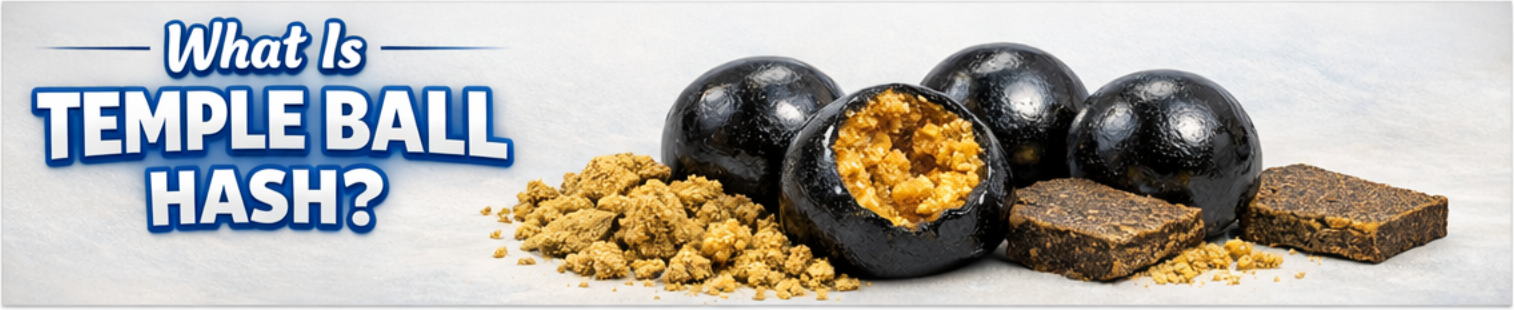
Temple ball hash is a traditional style of pressed hash rolled into a glossy sphere. The outside usually darkens and firms as the resin is warmed and worked, while the inside can stay softer, richer, and more aromatic.
People usually associate temple ball hash with old-school hashmaking rather than modern melt grading. The conversation here is about hand-pressed resin, aging, texture, aroma, and how the ball shape helps protect the material inside.
Definition
Temple ball hash is hash that has been collected and then pressed by hand into a ball, often with gentle warmth. The shape is not just cosmetic: compressing the resin helps create a darker exterior and a softer interior.
Depending on how it is made, temple ball hash may start as sifted resin or ice-water hash that is dried and worked together. Quality depends on clean starting material, careful handling, and whether the final ball feels resinous rather than dusty or contaminated.
Temple ball hash is best understood as a hand-pressed traditional hash format whose texture, aroma, and aging can differ noticeably between the outer shell and the inner core.
History and context
Temple ball hash is tied more to traditional hash culture than to lab-style grading language. The phrase became popular as people described hand-rolled balls of hash associated with Himalayan and Nepalese traditions, though modern versions can vary widely in how authentic or artisanal they really are.
- What it is A hand-pressed ball of hash with a firmer outer shell and a softer interior.
- Why it matters The shape changes handling, aging, aroma retention, and the way people talk about quality.
- What makes it different Temple ball hash is judged more by resin quality, texture, aroma, and workmanship than by “melt grade” language.
How it works
Producers begin with collected resin, then apply pressure and mild warmth from the hands or another gentle heat source to bind it into a dense sphere. As oils move outward, the shell can become darker, shinier, and slightly firmer than the center.
Aging matters too. With time, oxygen, warmth, and compression can deepen aroma, smooth texture, and change the way the ball breaks apart. Poorly made temple balls, though, can just become hard, dull, or overly dry.
What the evidence can and can’t say
That is why temple ball hash is best understood as a format and handling style—not a guaranteed quality tier on its own.
The easiest way to understand temple ball hash is to compare it with nearby forms of hash. Loose sift can be drier and more granular. Bubble hash can be cleaner and lighter in color. Hash rosin is what you get when hash is pressed into oil. Temple ball hash sits closer to the traditional pressed-hash conversation.
- Compared with loose sift — Temple ball hash is compressed into a resinous ball, while sift usually stays looser and more granular.
- Compared with traditional hash slabs — Temple ball hash shares the same traditional family, but the ball shape can protect the interior and change how it ages.
- Compared with hash rosin — Temple ball hash is pressed hash resin itself, while hash rosin is the oil extracted by pressing hash with heat and pressure.
Types and common forms
Temple ball hash can vary by starting material, firmness, age, and finish. Some look almost black and polished on the outside, while others are lighter brown and softer. Interiors can range from pliable and oily to crumbly and dry, depending on resin quality and curing.
- Fresh temple ball — Softer, stickier, and more pliable, often with a brighter aroma and less developed outer shell.
- Aged temple ball — Firmer and darker outside, often with a deeper aroma and a more distinct contrast between shell and center.
- Soft resin-rich ball — More pliable and oily, usually prized for aroma and workable texture.
- Drier pressed ball — Can still be useful, but often feels less aromatic and less luxurious than a well-made resin-rich ball.
How to use temple ball hash in real life
Temple ball hash is usually broken apart in small pieces rather than treated like a ready-to-dab oil. Many people warm it slightly with fingers or a tool, then work off a small amount for their preferred setup.
- Start small because compressed resin can feel stronger and richer than it first looks.
- Warm it gently rather than overheating it, so the texture stays workable and the aroma stays cleaner.
- Use a clean tool or clean fingers so the outer shell does not pick up lint, dust, or residue.
- Store it cool and sealed so the ball does not dry out, harden excessively, or lose aroma too quickly.
Safety, legality, and what to watch for
Temple ball hash can be stronger than it looks because compressed resin can concentrate aroma and potency. Start lower than you think you need, especially if you are used to lighter flower or older, drier hash.
Storage and cleanliness matter too. Keep temple ball hash cool, sealed, and away from heat so the exterior does not harden excessively and the inside does not dry out or pick up contamination.
Quality checklist (COA / lab reports)
Quality temple ball hash should look well-worked rather than randomly compressed. A glossy outer skin, a rich aroma, and a clean interior texture matter more than color alone. A very dark shell can be normal, but it should still feel resinous rather than flat or dirty.
- Understand that temple ball hash is a pressed format, not automatically a quality grade by itself.
- Compare the shell, the interior, and the aroma instead of judging by color alone.
- Look for clean resin behavior rather than dusty plant-heavy texture.
- Store it cool, sealed, and clean so aroma and texture hold up.
- Treat authenticity claims carefully; some modern products borrow the name without the traditional workmanship.
- Look for a glossy, worked outer skin rather than something dull, chalky, or randomly compressed.
- A clean, rich aroma usually tells you more than color by itself.
- The interior should feel resinous or pliable—not full of obvious debris or excessive dryness.
- Storage matters because heat, light, and air can flatten aroma and harden the texture quickly.
How to shop smarter
When shopping for temple ball hash, focus on the starting material, the workmanship, the aroma, and the feel of the resin. A dramatic dark shell can look impressive, but real quality shows up in how cleanly the ball was made and how the interior behaves when opened.
- Ask whether it was hand-pressed from sift, bubble hash, or another resin source.
- Pay attention to aroma and interior texture, not just the polished outside.
- Fresh, carefully stored temple ball hash usually smells deeper and feels more alive than neglected stock.
- Treat novelty branding carefully; the name “temple ball” can be used loosely.
Common myths (and what’s actually true)
A lot of confusion around temple ball hash comes from assuming the shape alone proves quality or origin. It does not. The ball format tells you something about handling, but not everything about what is inside.
- Temple ball hash is always imported from Nepal or the Himalayas. — No. The style draws from older traditions, but modern temple balls can be made in many places.
- A darker shell always means higher quality. — No. Darkening can come from pressing and aging, but the aroma, interior texture, and cleanliness matter more.
- Temple ball hash is the same as hash rosin. — No. Temple ball hash is pressed resin itself, while hash rosin is oil pressed out of hash.
FAQ
What is temple ball hash made from?
Temple ball hash is made from collected resin—often sifted trichomes or dried ice-water hash—that is pressed and worked into a ball with gentle warmth and pressure.
Is temple ball hash the same as bubble hash?
No. Bubble hash describes resin separated with ice water and screens. Temple ball hash describes a pressed ball format, and some temple balls may be made from bubble hash while others are made from sift or other resin.
Why is temple ball hash rolled into a ball?
The ball shape makes the hash easier to handle, protects the interior, and can encourage a firmer outer shell with a softer center as the resin is pressed and aged.